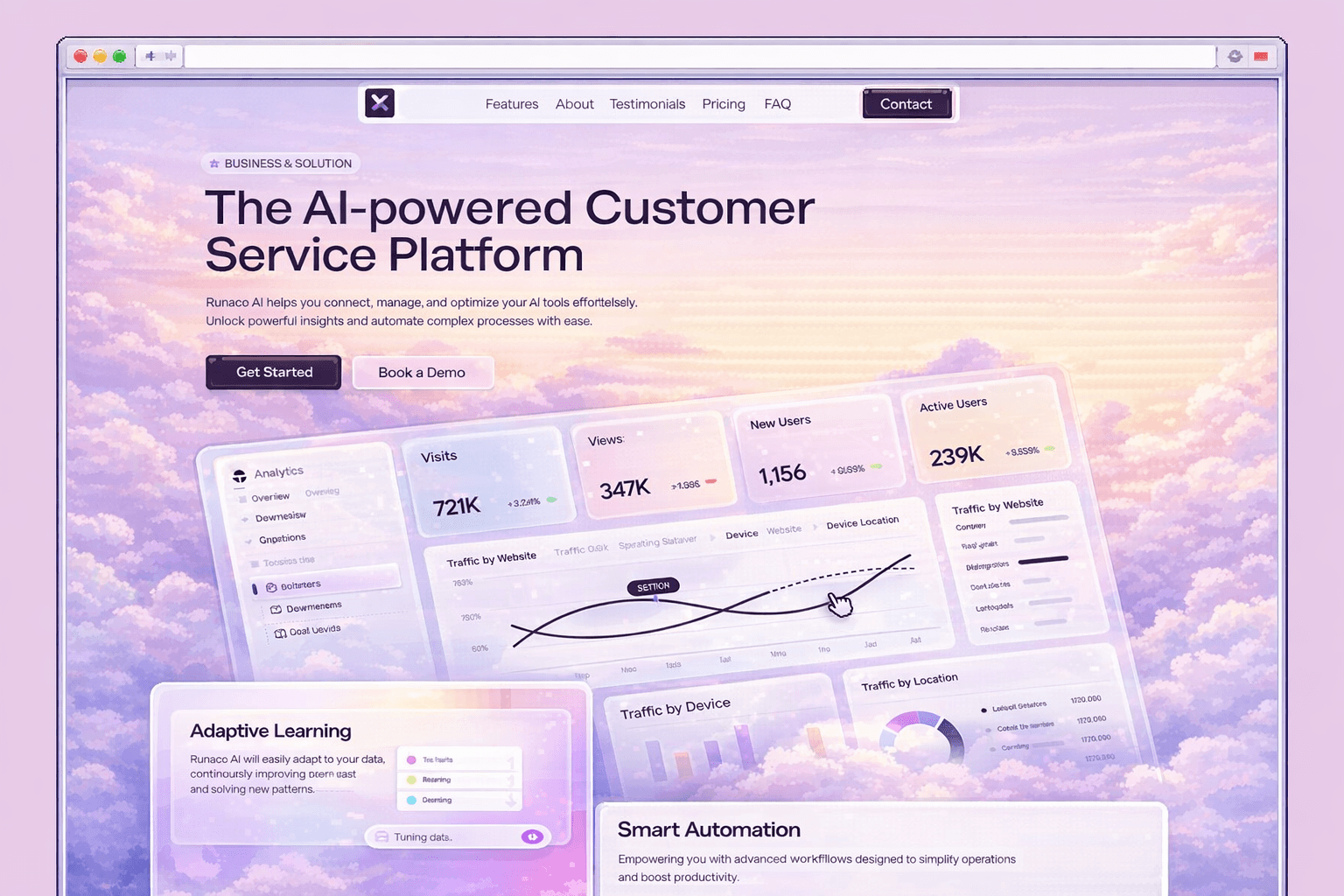
For a SaaS startup, your landing page isn’t just a marketing asset. It’s your first conversion point, your brand statement, and often the reason a user decides to sign up or leave.
The best SaaS landing pages blend clarity, psychology, and design precision. Every word and visual drives the visitor toward a single action.
At Sitesmith, we’ve seen how small design and copy shifts can double conversion rates. Here’s what goes into building a landing page that performs.
1. A headline that makes sense instantly
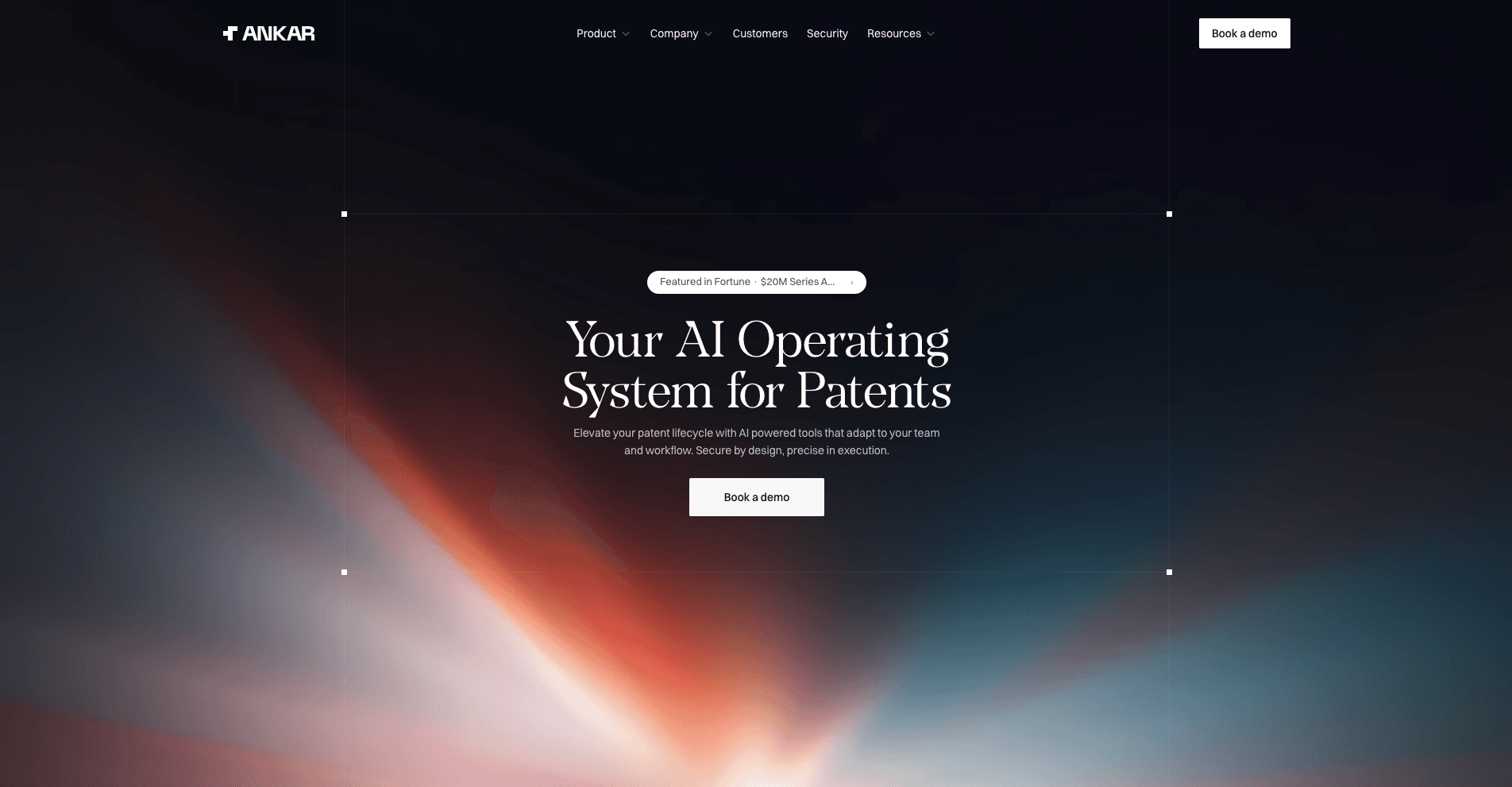
Your headline is the most important element of any SaaS landing page. It should answer one question: What problem does this solve for me?
Avoid abstract lines or brand slogans. Focus on clarity and benefit. For example:
Instead of “Reimagining productivity,” say “Plan your team’s week in minutes.”
A clear, direct message helps users anchor themselves immediately, which increases dwell time and lowers bounce rates, both positive signals for SEO.
2. A subheadline that deepens understanding
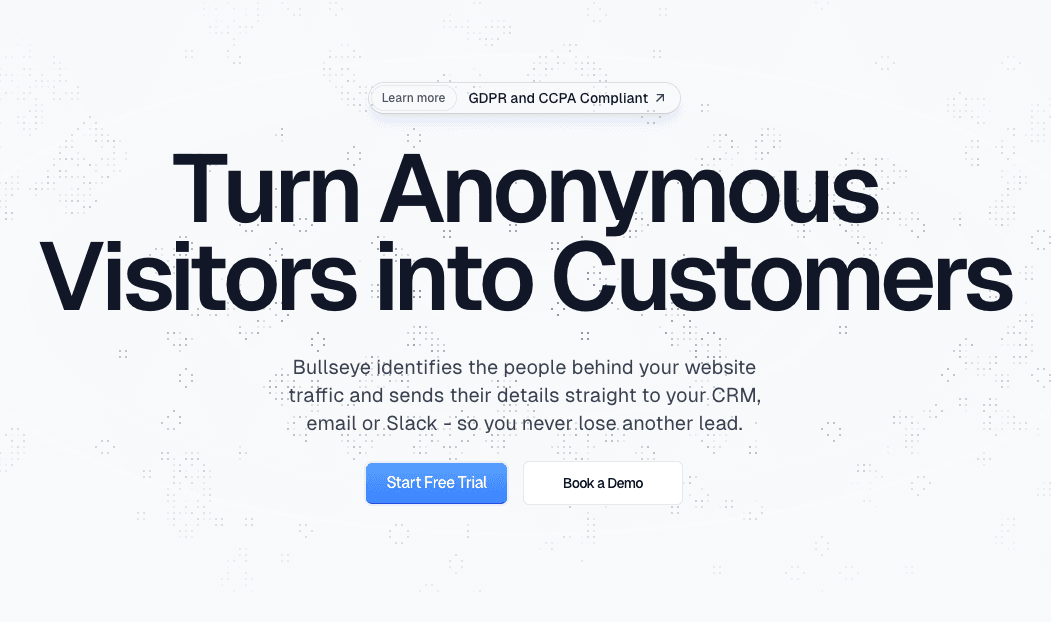
Your call to action (CTA) is where intent becomes conversion. Instead of generic text like “Sign up,” use action-oriented, benefit-driven CTAs such as “Start your free trial” or “Automate billing now.”
Keep your primary CTA visible across scrolls, in the hero, mid-page, and footer. A consistent CTA improves both engagement metrics and conversion rate.
3. A call to action that feels intuitive
In SaaS, visitors look for cues that you’re credible. Testimonials, case studies, and customer logos build social proof and reduce hesitation.
Show outcomes, not adjectives. Instead of “We helped them scale,” say “Helped Acme increase sign-ups by 38 percent.”
This kind of specificity improves trust while adding keyword-rich content that supports organic visibility.
4. Proof that builds instant trust
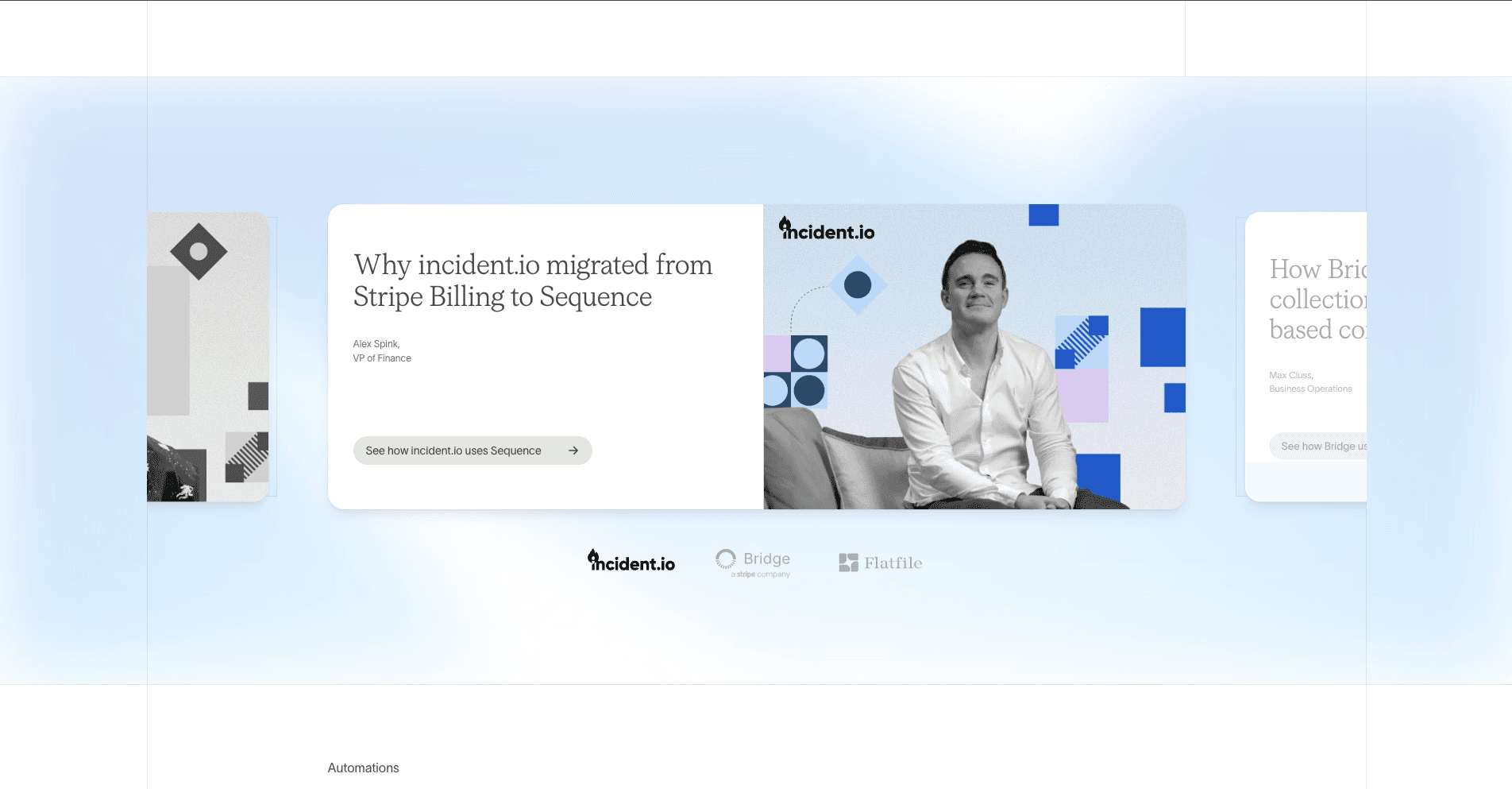
In SaaS, visitors look for cues that you’re credible. Testimonials, case studies, and customer logos build social proof and reduce hesitation.
Show outcomes, not adjectives. Instead of “We helped them scale,” say “Helped Acme increase sign-ups by 38 percent.”
This kind of specificity improves trust while adding keyword-rich content that supports organic visibility.
You built the product. You lived the chaos.
Don’t let your website be the weak link.
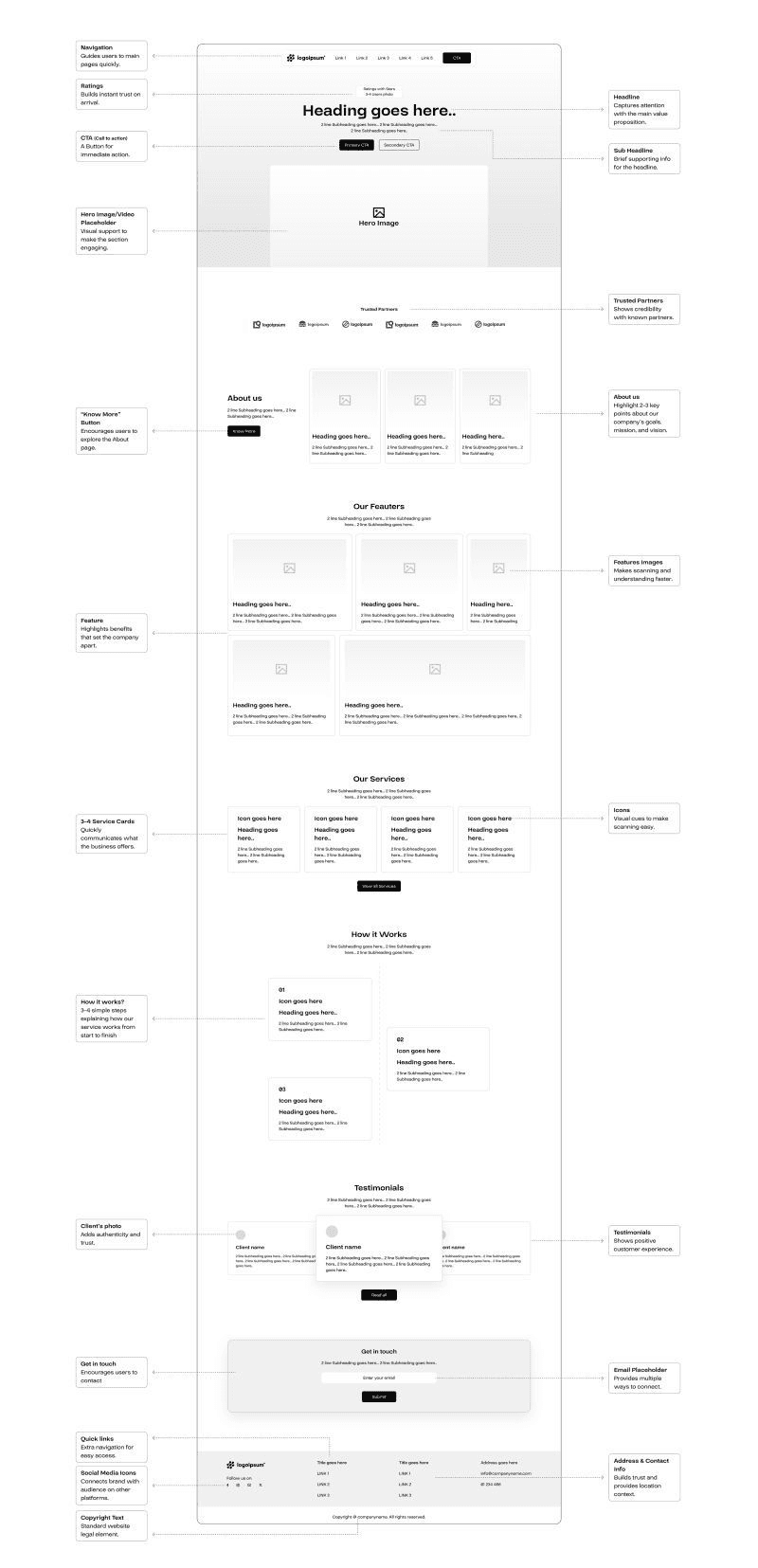
5. Visual hierarchy that leads the user
Every section on your landing page should have a purpose — awareness, interest, or action.
Use contrast, white space, and rhythm to create a natural scroll path from headline to CTA.
Google tracks engagement metrics like scroll depth and time on page. A clean, readable layout improves both.
6. Copy that converts through clarity
Feature lists don’t sell; outcomes do. Your landing page copy should mirror how your users think and speak.
Lead with verbs and outcomes: “Track invoices automatically,” “Collaborate in real time,” “Launch without code.”
This is not just persuasive writing, it also strengthens SEO by pairing real-world use cases with relevant keywords.
7. A frictionless experience
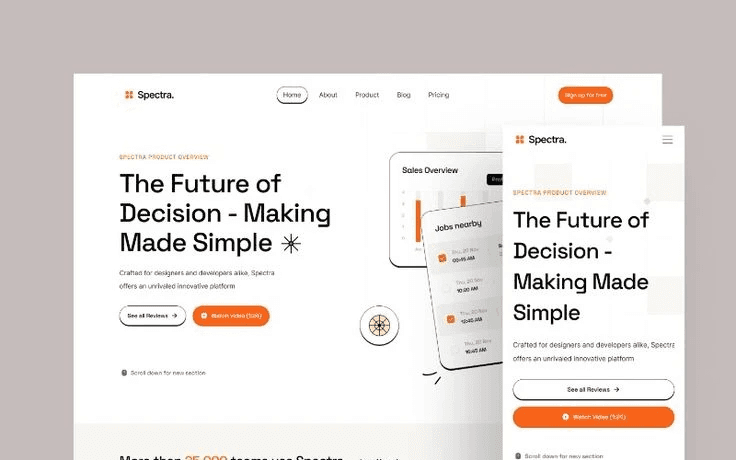
A high-performing SaaS landing page doesn’t just look great; it feels effortless to use.
Fast load times, responsive layouts, and clean interactions all contribute to conversion rate and search ranking.
Building in Framer makes that easy. It delivers clean code, mobile optimization, and instant publishing, giving founders full control over iteration speed without relying on developers.
Where Sitesmith fits in
At Sitesmith, we help SaaS founders design and launch websites that convert, built in Framer and optimized for speed, clarity, and growth.
Every layout and copy block is designed to do one thing: help your users say yes faster.
Our process combines Framer development, SaaS positioning, and conversion-first design to create pages that look good, rank well, and drive measurable results.



FAQs
Will our website help us get more signups?
Yes. We focus on clear messaging, smart design, and user-friendly layouts that guide visitors to take action like signing up, booking a demo, or starting a free trial.
Do you help with branding too?
We can help refine your brand, including colors, fonts, and style, especially if it connects to the website. If you need full branding from scratch, we can recommend trusted partners.
Is the website built with SEO in mind?
Definitely. We make sure your site loads fast, works on all devices, and is easy for Google to understand and rank.
Can you move our current site to Framer?
Yes. We often take existing sites and rebuild them in Framer so they look better, run faster, and are easier to manage.
Can you connect tools like HubSpot or Stripe to our site?
Absolutely. We regularly set up sites with tools like HubSpot, Stripe, Zapier, and more to make sure everything works together smoothly.
Will we be able to update the site ourselves later?
Yes. Once your site is live, you’ll be able to make simple edits without needing a developer. We’ll show you how.
What’s your process like?
We start with a quick discovery call, then move into design, build, and launch. We keep things simple and collaborative the whole way through.
Do you work with startups too?
Yes. Whether you're just getting started or already growing fast, we tailor our approach to fit your stage and needs.